2026-10-27 · Rick Morales
How to Choose the Right Dumpster Size for a Tacoma Remodel
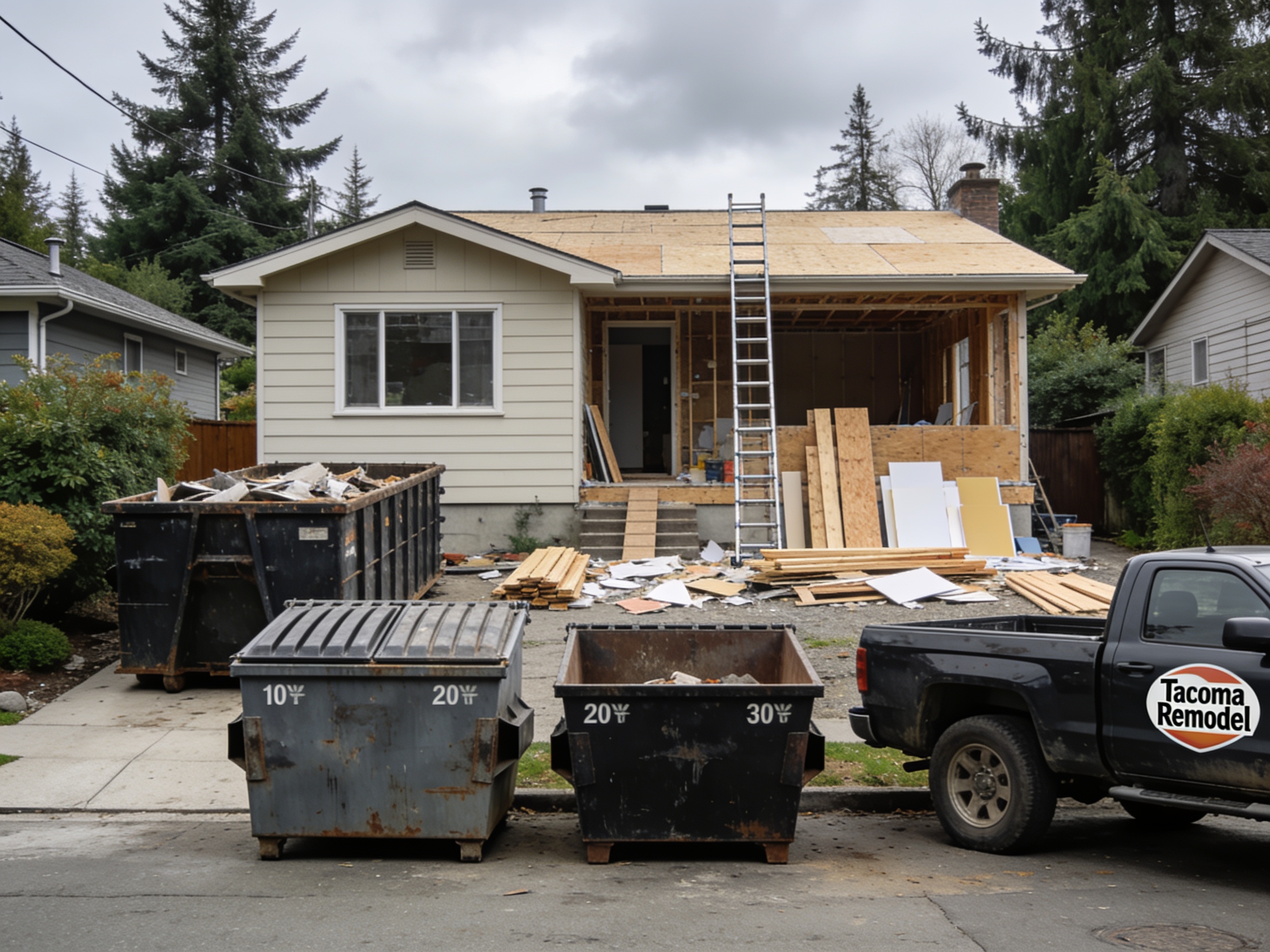
For most Tacoma remodels involving kitchen updates or bathroom renovations in single-family homes, a 20-yard dumpster provides the right balance, handling 4-6 tons of mixed waste like drywall, lumber, and fixtures while fitting typical driveways in neighborhoods such as the North End or Hilltop.
Evaluating Project Debris Volume
Start by breaking down the remodel scope into specific waste categories. A bathroom gut in a 1920s Hilltop bungalow generates roughly 2-3 tons of tile, plaster, and cabinetry, while a full kitchen overhaul in a South End ranch often exceeds 5 tons when including countertops and flooring. Measure room dimensions and estimate material thickness to calculate cubic yards accurately. Older Pierce County homes frequently contain lath-and-plaster walls that add weight and volume compared with newer drywall. Factor in any structural changes, such as removing load-bearing beams, which can double debris output. This step prevents under-sizing that requires extra rentals or over-sizing that wastes money on unused space.
Matching Sizes to Tacoma Remodel Types
10-yard dumpsters suit small projects like single-room flooring removal or minor demolition in compact Eastside lots. 20-yard units cover mid-range jobs such as whole-house window replacement or attic insulation upgrades common in Stadium District properties. Larger 30- or 40-yard containers handle extensive additions or multi-room gut jobs where debris exceeds 8 tons. Avoid assuming every remodel needs the biggest option; a Proctor District porch rebuild rarely justifies more than 15 yards. Cross-check your estimate against the actual weight limits, since wet lumber from local suppliers increases load density. This matching process keeps hauls efficient and costs predictable across Pierce County projects.
Accounting for Pierce County's Weather Patterns
Tacoma's mild marine climate brings cool summers and frequent wet winters that directly affect dumpster selection. Rain-soaked debris adds 20-30% extra weight, so a project that looks like 15 yards dry may push a 20-yard container over limits during November through February. Managing Waste During Tacoma's Rainy Winter Months explains covering loads properly to avoid overflow fees. Wet soil in West End yards can also limit truck access, favoring slightly smaller units that maneuver better on soft ground. Plan for covered placement or tarps when scheduling during the rainy season to maintain accurate volume estimates.
Placement and Access in Local Neighborhoods
Driveway width and street parking rules vary sharply between Downtown Tacoma alleys and spacious North End lots. Narrower streets in the Hilltop often require a 10- or 15-yard dumpster to maintain clearance for neighbors. Check slope and gate dimensions before ordering, since 40-yard roll-offs need at least 60 feet of straight approach. Navigating Dumpster Permits for Street Placement in Tacoma covers the permit process for curb-side placement when driveways cannot accommodate the unit. University Place and Lakewood projects sometimes face additional HOA restrictions on container size and duration. Measure twice and confirm access with the rental company to avoid delivery delays.
Practical Tips for Efficient Rental
Order the dumpster two to three days before demolition begins to align with your schedule. Place it on plywood sheets in soft Pierce County soil to prevent sinking during wet periods. Sort metal and concrete separately when possible to reduce overall weight. Monitor fill levels daily and request a swap once the container reaches 80% capacity rather than waiting for overflow. These steps keep the remodel on track whether you are working in Federal Way or closer to the Tacoma Dome.