2026-10-27 · Rick Morales
Managing Waste During Tacoma's Rainy Winter Months
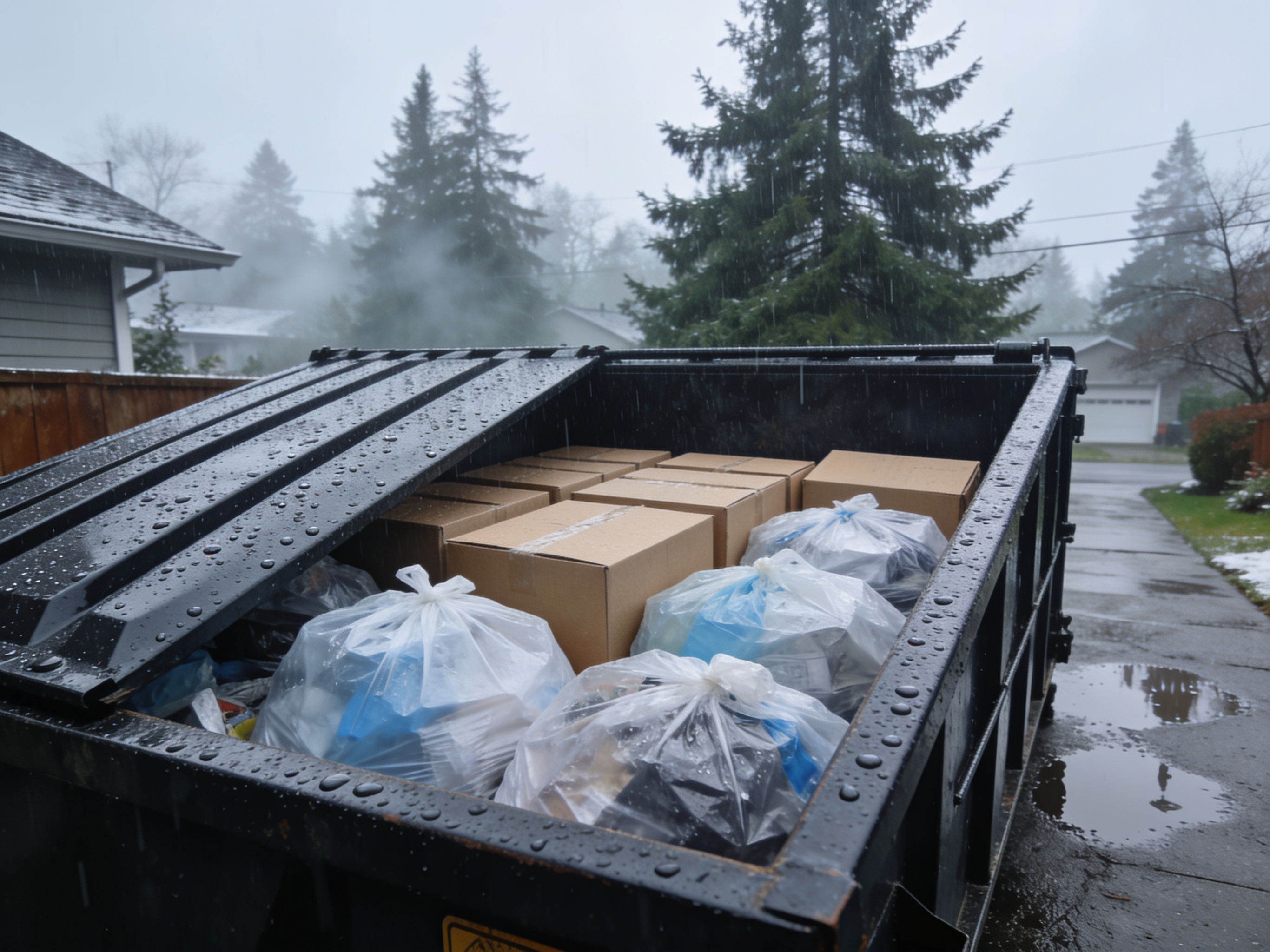
Tacoma's wet winters require covering loads immediately after filling and scheduling pickups before heavy rain saturates materials, which adds weight and creates runoff issues on saturated soil in neighborhoods such as the Stadium District and Proctor District. Older housing stock from the early 1900s in the North End often generates more mixed debris during indoor remodels when outdoor work slows, while South End and Eastside properties with steeper lots need extra care to prevent dumpsters from shifting on muddy ground. Placement on gravel or plywood bases helps stabilize units in Downtown Tacoma and near the Tacoma Dome where street access can be tight.
Stabilizing Dumpsters on Saturated Ground
Pierce County winters turn clay-heavy soils into slippery surfaces that shift under loaded containers, especially on lots near Point Defiance Park or the Chihuly Bridge of Glass where drainage is limited. Operators place 2x4 or plywood bases under wheels before positioning units in the West End or Hilltop to avoid sinking that delays removal. Rain also increases the weight of drywall and insulation scraps by 20-30 percent, so crews check load limits daily rather than waiting for the next scheduled visit. In University Place and Federal Way, where many single-family homes sit on sloped driveways, crews often recommend smaller 10- or 15-yard containers to keep trucks from getting stuck during pickup.
Scheduling Around Frequent Rainfall
With rain falling on most days from November through February, crews in Lakewood and nearby areas book morning deliveries when forecasts show lighter precipitation windows. This timing lets homeowners cover loads with tarps before afternoon showers begin, reducing water accumulation that can push total weight over limits. Properties near Union Station or the Museum of Glass often have limited street parking, so same-day adjustments become necessary when a storm arrives earlier than predicted. Residents in the Eastside and South End report fewer delays when they call ahead to confirm availability rather than assuming standard routes will hold during peak wet periods.
Selecting Sizes for Winter Indoor Projects
Indoor work ramps up once temperatures drop, producing steady streams of tile, carpet, and cabinet waste that fit better in 20-yard containers for most Tacoma remodels. How to Choose the Right Dumpster Size for a Tacoma Remodel outlines volume calculations that account for the added bulk from wet packaging and protective sheeting. In the Stadium District and Proctor District, where many homes lack wide driveways, a 10-yard unit placed on the street often suffices for bathroom updates while staying within city rules. Larger 30-yard containers work better on flat lots in the West End when multiple rooms are being cleared at once.
Placement and Permit Considerations in Wet Weather
Street placement near the Tacoma Dome or in Downtown Tacoma requires checking for storm-drain proximity so runoff does not carry debris into the system. Navigating Dumpster Permits for Street Placement in Tacoma details the paperwork needed when rain makes sidewalk access slippery. Crews in Ruston and Fircrest often suggest driveway placement on plywood to protect pavement from ruts caused by repeated truck turns on soft ground. Homeowners in nearby Lakewood and University Place benefit from confirming exact dimensions with the rental company before delivery to avoid last-minute moves during a downpour.
Practical Daily Steps for Homeowners
Check tarp straps each morning and tighten them after any wind gusts common along the waterfront near the Chihuly Bridge of Glass. Keep a spare tarp on site because one can tear when loaded with sharp metal or broken concrete. Empty smaller household bins into the main container before they overflow and mix with rainwater. In the North End and Hilltop, where alleys can flood, schedule final removal before a multi-day storm arrives rather than risking an extra week of accumulation. These habits keep loads drier, reduce total weight, and help crews maintain reliable service across Pierce County even when conditions stay wet for weeks at a time.